
Understanding Car Shipping Insurance Coverage: A Complete Guide for Your Peace of Mind
Estimated reading time: 8 minutes
Key Takeaways
- Personal auto policies rarely cover vehicles while they are being transported by a third party.
- Federal law requires carriers to have liability insurance, but cargo limits can vary.
- The Bill of Lading (BOL) is your most critical legal document for filing a damage claim.
- Standard shipping insurance typically excludes personal items left inside the vehicle.
- You must inspect your car and take photos before and after transport to ensure valid coverage.
Table of contents
- Introduction: Addressing the Anxiety of Vehicle Transport
- The Big Question: Does My Insurance Cover Car Shipping?
- The Carrier’s Role: Understanding Cross State Car Shipping Liability
- Navigating Long-Distance and Car Shipping Insurance Out of State
- What Is and Isn’t Covered: An Auto Transport Insurance Guide
- The Importance of the Bill of Lading (BOL)
- Steps to Ensure You Are Protected (Checklist)
- Conclusion
- Frequently Asked Questions
1. Introduction: Addressing the Anxiety of Vehicle Transport
Handing over the keys to your vehicle can be a scary moment. You rely on your car every day. It is likely one of the most expensive things you own. Watching a stranger drive it onto a large truck can make your stomach turn. You might wonder if it will arrive safely at your new home. This is a normal feeling. Almost everyone who moves a car feels this way.
However, you should know that the industry is very safe. Data shows that damage happens to less than 5% of all vehicles that are transported. This means that the vast majority of cars arrive without a single scratch. Even though the risk is low, the worry is real. This is why having the right protection is so important.
The most important tool for your peace of mind is car shipping insurance coverage. Many people think their normal car insurance handles everything. This is usually not true. Shipping a car is very different from driving it. The rules change once the car is on a truck.
To feel safe, you must understand how this special insurance works. It is not just an optional extra. It is a vital part of the moving process. The Federal Motor Carrier Safety Administration (FMCSA) makes strict rules for carriers. These rules force companies to have liability coverage. Understanding these rules is the best way to lower your stress. When you know who pays if something goes wrong, you can relax.
In this guide, we will look at exactly how your car is protected. We will explain what carriers must do by law. We will also look at what you need to do to keep your vehicle safe. By the end of this post, you will be an expert on vehicle transport safety.
2. The Big Question: Does My Insurance Cover Car Shipping?
One of the first questions people ask is: does my insurance cover car shipping? It is a very good question. You pay for car insurance every month. You assume it protects your car all the time. However, this is often a misunderstanding.
Most personal auto policies are designed for driving. They cover you when you are behind the wheel. They cover you if you hit another car. They cover you if someone hits you while you are parked. But when a car is loaded onto a transport truck, its status changes. It becomes “cargo.”
When your car is cargo, your personal policy limitations kick in. Many standard insurance providers will not cover a vehicle while it is being shipped. They view this as a commercial activity. Because you are not driving, they do not take the risk. If they do offer coverage, it is rarely enough.
If your personal policy does apply, it often acts as “secondary coverage.” This means it only pays after the trucking company’s insurance pays. Or, it might only pay if the trucking company denies the claim. This can get complicated quickly.
Furthermore, using your own insurance often means paying a deductible. You might have to pay $500 or $1,000 out of your own pocket before the insurance company pays a cent. Your rates could also go up because you filed a claim.
It is crucial that you do not guess. You must call your insurance agent. Ask them specifically about “vehicle transport” or “shipping cargo.” Ask them if you are covered for damage that happens while a third party is hauling your car.
In most cases, the carrier’s insurance is the primary coverage. This means the trucking company is responsible for negligence. If the driver makes a mistake, their insurance pays. Your personal policy is just a backup plan. Do not rely on it as your main safety net.
3. The Carrier’s Role: Understanding Cross State Car Shipping Liability
To understand your protection, you must understand the carrier’s job. Professional haulers have legal requirements they must follow. The federal government watches over this industry. They ensure that every legitimate carrier has financial protection. This concept is often referred to as cross state car shipping liability.
There are two main types of insurance that a carrier must have. It is easy to confuse them, so let us break them down simply.
Public Liability Insurance
The law requires every carrier to have Public Liability Insurance. The minimum amount required is $750,000. This sounds like a huge amount of money. You might think this covers your car completely. However, this is a common mistake.
Public liability covers damage the truck causes to the public. If the truck crashes into a building, this insurance pays. If the truck hits another driver on the highway, this insurance pays. It protects the public from the heavy truck. It does not necessarily cover the cargo on the back of the truck. Your car is the cargo. So, this big number does not apply to your vehicle directly.
Cargo Insurance
This is the coverage you care about. Cargo insurance protects the vehicles being hauled. This covers damage caused by the carrier’s negligence. If the driver scrapes your roof, this pays. If the truck flips over, this pays.
Most carriers have cargo policies ranging from $100,000 to $250,000 per load. This limit is crucial. It is the pool of money available to fix the cars on the trailer. This requirement applies to all moves that cross state lines. Because of FMCSA oversight, these rules are consistent everywhere in the country.
Important Distinction: Acts of God
There is one major gap in standard liability. Carrier insurance covers negligence. This means mistakes the driver or company made. It does not usually cover “Acts of God.”
Acts of God are weather events. This includes hail storms, floods, tornadoes, or earthquakes. If a rock falls off a mountain and hits your car, that is an Act of God. The driver did not cause the rock to fall. Therefore, standard liability might not pay.
Some carriers have comprehensive policies that do cover these events. However, you must ask. Do not assume that weather damage is covered. This is why checking the details of cross state car shipping liability is so important before you book.
4. Navigating Long-Distance and Car Shipping Insurance Out of State
Moving a car across the country is different from moving it across town. When you look for car shipping insurance out of state, you have to think about “exposure time.”
The Risk of Long Distances
The rules for insurance do not change just because the trip is longer. Federal law stays the same. However, the risk goes up. A trip from New York to California takes several days. That is hundreds of hours on the road.
During a long trip, the car is exposed to the environment for a long time. There is more time for a storm to happen. There is more time for road debris to kick up. There is more time for mechanical issues to happen to the truck. While the insurance policy is the same, the chance of needing it is slightly higher on long trips.
The Shared Load Warning
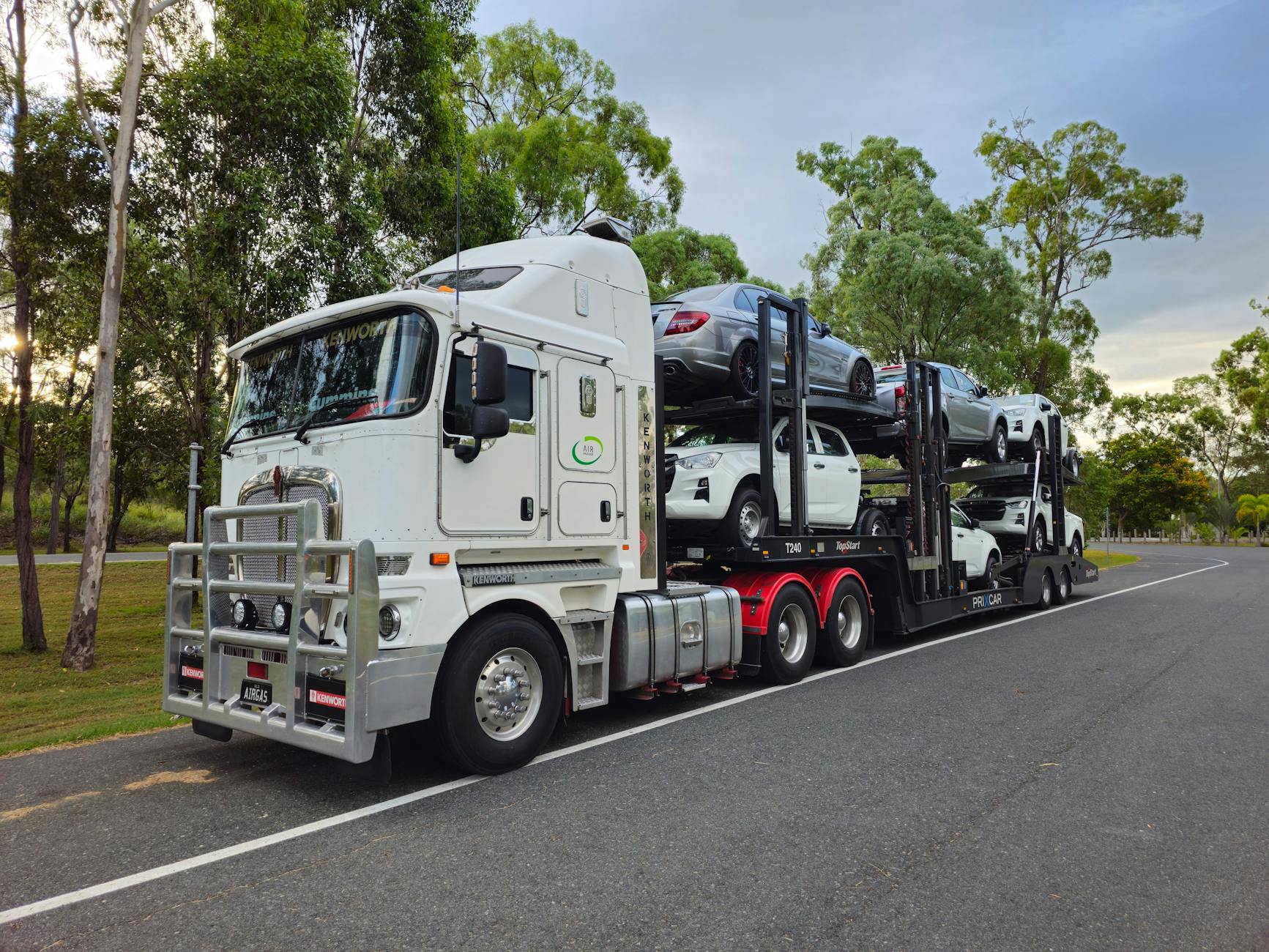
This is a detail many people miss. Most cars are shipped on open carriers. These are the large trucks you see with two decks of cars. They can hold 8 to 10 vehicles at once.
The cargo insurance limit we discussed earlier—usually $100,000 to $250,000—is often for the entire truckload. It is not always per vehicle. This is called a “shared limit.”
Imagine a truck is carrying 10 cars. If the cargo limit is $250,000, that sounds like enough. But what if all 10 cars are brand new luxury SUVs worth $50,000 each? The total value of the load is $500,000. The insurance limit is only $250,000. If the truck catches fire and all cars are lost, there is not enough money to pay everyone fully.
When you are shipping out of state, you must verify the limits. Ask the carrier what their total cargo limit is. Then, look at the other cars on the truck if possible. If you are shipping a very expensive car, an open carrier with a standard limit might be risky. You might need to ask for a carrier with a higher policy limit.
Understanding these details about car shipping insurance out of state helps you make smart choices. It prevents bad surprises if a total loss occurs.
5. What Is and Isn’t Covered: An Auto Transport Insurance Guide
Insurance documents are hard to read. They use confusing words. To make it easier, we have created this simple auto transport insurance guide. This section breaks down exactly what you can expect standard cargo insurance to cover, and what it usually excludes.
What Is Covered?
Standard cargo insurance protects your car from the carrier’s mistakes. Here are the specific scenarios where you are usually protected:
- Driver Negligence: If the driver backs into a pole or sideswipes a wall, you are covered.
- Major Accidents: If the transport truck gets into a collision on the highway.
- Equipment Failure: If the hydraulics on the ramp fail and drop your car, or a strap breaks.
- Loading and Unloading: This is when most minor damage happens. Scrapes on the bumper or undercarriage during loading are covered.
- Theft: If the car is stolen off the truck.
- Road Hazards: In many cases, damage from debris kicked up by the truck tires is covered, but this varies.
What Is NOT Covered?
There are specific things carriers will almost never pay for. Knowing these exclusions will save you from a denied claim.
- Personal Items: This is the most common dispute. If you leave a laptop, clothes, or boxes in the car, they are not covered. If they are stolen or damaged, the carrier is not responsible. Furthermore, if your heavy boxes shift and break a window from the inside, the carrier will not pay for the window.
- Pre-existing Damage: You cannot claim damage that was already there.
- Loose Parts: If you have a spoiler that is barely hanging on, and it flies off, the carrier is not liable. You must secure your vehicle.
- Full Value (in rare cases): As mentioned before, if the total load value is higher than the policy limit, you might not get the full value of your car back in a catastrophic loss.
Coverage Summary Table
| Coverage Type | What It Protects | Typical Limits | Key Exclusions |
|---|---|---|---|
| Public Liability | Damage the truck causes to others (people/property). | $750,000+ (Federal Minimum) | Does not cover your cargo directly. |
| Cargo Insurance | Damage to your vehicle due to carrier negligence/accident. | $100,000 – $250,000 per load | Personal items inside car; Pre-existing damage. |
| Supplemental | Extra protection you buy for high-value items. | Varies (1-5% of value) | Depends on the specific policy terms. |
Using this auto transport insurance guide allows you to see the gaps. If you have a luxury car or loose parts, you know you need to take extra steps.
6. The Importance of the Bill of Lading (BOL) for Car Transport Insurance Coverage
You can have the best insurance in the world, but it is useless without paperwork. In the shipping industry, the most important piece of paper is the Bill of Lading, or BOL.
The BOL is not just a receipt. It is a legal contract. It acts as the official condition report of your vehicle. Your ability to claim car transport insurance coverage depends entirely on this document.
The Process
When the driver arrives to pick up your car, you will do an inspection together. You will walk around the car. You will look for scratches, dents, and chips. The driver will mark these down on the BOL. You must sign this paper to agree that the markings are correct.
When the car is delivered, you will do this again. This is the “post-inspection.” You must look at the car carefully. You compare the condition now to the notes on the pickup BOL.
The Golden Rule of Shipping
If damage is not written on the BOL at the time of delivery, you cannot file a claim. This is the golden rule. If you sign the paper saying the car is fine, and then find a scratch the next day, the insurance company will deny you. They will say the damage happened after they dropped it off.
You must be diligent. Do not let the driver rush you. If the car is dirty, wipe off the important areas. If it is dark, use a flashlight. If you see new damage, you must write it down on the Bill of Lading before you sign it. The driver must sign it too.
High-quality carriers understand this. They are transparent. They want you to be comfortable. They will provide their insurance certificates upfront and explain the BOL process. If a carrier tries to skip the inspection, that is a red flag. Always protect your right to car transport insurance coverage by documenting everything.
7. Steps to Ensure You Are Protected (Checklist)
Knowing the rules is half the battle. The other half is preparing your vehicle. You can lower your risk significantly by being proactive. Follow this checklist to ensure your vehicle protection is valid and effective.
- Wash the Vehicle
It sounds simple, but it is critical. You cannot see scratches on a dirty car. If the car is covered in dust or mud, the driver might mark “scratches hidden” on the inspection report. This invalidates your claim for scratches later. Wash the car thoroughly before the truck arrives. - Create Visual Evidence
Do not rely only on the driver’s notes. Take your own photos. Walk around the entire car with your phone. Take pictures of every panel. Take close-ups of existing damage. Take pictures of the odometer. Take a video walking around the car. Most importantly, make sure these photos are timestamped. This proves the condition of the car right before it was loaded. - Verify Documents Early
Do not wait until the truck is in your driveway to ask about insurance. Request the carrier’s insurance certificate before you book. Look for the “MC” (Motor Carrier) number. You can verify this on the FMCSA website. Check the cargo limits. Make sure they are high enough for your car. - Clear the Car
As we discussed, personal items are not covered. They also add weight and can cause damage. Remove all luggage, electronics, and valuables. You should also secure loose parts. If you have custom fog lights or a loose antenna, take them off or tape them down. - Consider Supplemental Coverage
If you are shipping a classic car, a luxury sports car, or a vintage vehicle, standard coverage might not be enough. The shared limit might be too low. In this case, ask about “supplemental coverage.” You can often buy extra protection for a fee. This fee is usually between 1% and 5% of the vehicle’s value. It acts as a gap filler between the carrier’s limit and your car’s true value. - Avoid Non-Compliant Providers
If a company refuses to show you their insurance proof, run away. Legitimate companies are proud of their compliance. Transparency is the sign of a safe carrier.
8. Conclusion
Moving is a stressful time, but shipping your car does not have to be a nightmare. The anxiety comes from the unknown. Now that you understand how car shipping insurance coverage works, you can move forward with confidence.
Remember the key takeaways. Your personal driving insurance likely won’t cover the trip, so you must rely on the carrier’s cargo insurance. This insurance is mandatory and federally regulated. However, it has limits. You must check that the limits match the value of your car.
Most importantly, respect the paperwork. The Bill of Lading is your shield. Inspect your car carefully at pickup and delivery. Take photos. Write down every detail. If you follow the checklist and verify your carrier, long-distance moves are safe and low-risk. You can focus on settling into your new home, knowing your vehicle is in good hands and fully protected.
Frequently Asked Questions
Does my personal auto insurance cover car shipping?
In most cases, no. Personal auto policies generally exclude coverage while your vehicle is being transported by a third party for commercial purposes. You should check with your agent, but you usually need to rely on the carrier’s cargo insurance.
What is the difference between Public Liability and Cargo Insurance?
Public Liability insurance (usually $750,000 minimum) covers damage the truck causes to the public or property during an accident. Cargo insurance (usually $100,000 to $250,000) specifically covers damage to the vehicles being transported on the trailer.
Are personal items inside the car covered by insurance?
No. Carrier insurance policies almost strictly exclude personal items left inside the vehicle. If items are stolen or damaged, or if they cause damage to the car’s interior during transit, you will not be reimbursed.
What is a Bill of Lading (BOL)?
The Bill of Lading is a legal contract and receipt that documents the condition of your vehicle at pickup and delivery. It is crucial for insurance claims; if damage is not noted on the BOL at delivery, your claim will likely be denied.
What are “Acts of God” in shipping insurance?
“Acts of God” refer to natural events like hail, tornadoes, or earthquakes. Standard carrier negligence policies may not cover damage caused by these weather events, though some comprehensive policies might.