How Much Does It Cost to Ship a Car? The Complete Pricing Guide
Estimated reading time: 8 minutes
Key Takeaways
- The average cost to ship a car is approximately $1,300, but ranges from $500 to $1,700 based on specifics.
- Major cost factors include distance, vehicle size, and the season in which you ship.
- Open transport is the standard, affordable option, costing ~$400 less than enclosed shipping.
- Door-to-door shipping offers convenience and may be cheaper than terminal shipping when storage fees are considered.
- Driving yourself is not always cheaper when you factor in gas, food, hotels, and wear and tear.
Table of contents
- How Much Does It Cost to Ship a Car?
- Understanding the Variables: Your Car Transport Price Guide
- Key Factors That Influence Your Final Cost
- Transport Method Comparisons: Choosing Your Service Level
- Strategic Budgeting: How to Save Money
- Conclusion
- Frequently Asked Questions
Moving to a new home is one of the biggest events in life. It is also one of the most expensive. You have to pay for boxes, movers, and deposits. Then, you have to figure out how to move your vehicle. This is often the most confusing part of the budget.
You probably have one burning question right now. How much does it cost to ship a car?
You need a number to put in your spreadsheet. We can give you that answer right away.
The average cost to ship a car across the country is approximately $1,300.
However, that is just an average. The price usually ranges between $500 for short distances to $1,700 for cross-country transport.
It is important to know that these numbers are estimates. Shipping a vehicle is not like buying a gallon of milk. There is no fixed sticker price.
The final cost changes based on many things. It depends on how far you are going. It depends on how big your car is. It even depends on the time of year.
In this guide, we will break down exactly how these prices are calculated. We will show you what creates the price tag. By the end, you will know exactly what to expect.
Understanding the Variables: Your Car Transport Price Guide
Have you ever looked for plane tickets? You know how the price changes every day? Auto transport is very similar.
The price you see is not a flat fee. It is a market rate. This rate changes based on real-time logistics.
Carriers have to look at supply and demand. They have to look at fuel prices. They have to look at the weather.
This can be confusing for customers. You might wonder why your quote is different from someone else’s.
Imagine you and your neighbor are both moving on the same day. You are both moving to the same city. You might think the price would be the same.
But, your neighbor drives a large pickup truck. You drive a small sedan. Your neighbor needs their truck there in two days. You are okay waiting for a week.
Because of these differences, your quotes will not be the same. The truck takes up more space. The fast delivery requires a special driver.
This section serves as your foundational car transport price guide. It helps you understand the “why” behind the dollar sign. When you understand the variables, the quote makes sense. You can see where your money is going.
Key Factors That Influence Your Final Cost: Car Shipping Cost Factors
Now we will look at the specific details. We will break down the bill.
There are three main things that change the price. If you change one of these, the price goes up or down.
Knowing these car shipping cost factors puts you in control.
Factor 1: Distance and Route
The biggest factor is how far you are going. This is the primary driver of cost.
The carrier has to pay for fuel. They have to pay the driver for their time. They have to pay for wear and tear on the big rig. The more miles they drive, the more it costs.
However, the “price per mile” actually goes down the further you go. But the total bill will be higher.
Costs range from $600 for a few hundred miles (open carrier) to $1,800 for cross-country (enclosed).
Here is a breakdown of average costs based on distance:
- Less than 500 miles: ~$780
- 500 to 1,000 miles: ~$960
- 1,000 to 1,500 miles: ~$1,290
- 1,500 to 2,000 miles: ~$1,530
- More than 2,000 miles: ~$1,600
The route matters too. It is not just about miles. It is about popularity.
Truckers like popular routes. There are more cars to move. This makes it easier to fill the truck.
For example, a route from the East Coast to the West Coast is very popular. There are many trucks going back and forth.
East Coast to West Coast shipping costs about $1,100 for a sedan.
But what if you are going somewhere less popular?
East Coast to Midwest runs about $700 for a sedan.
Even though the Midwest is closer, the price difference isn’t huge compared to the coast. This is because fewer trucks run that route. Supply and demand plays a big role here.
Factor 2: Vehicle Size and Type
The next big factor is what you are shipping.
Carriers have limited space. A standard car hauler can hold about 9 or 10 cars.
But that assumes the cars are normal size. If you have a huge truck, it takes up more room. It might take up the space of two small cars.
Because it takes up more space, the carrier charges more. They are losing the chance to ship a second car.
Weight is also an issue. Trucks have strict weight limits on the highway. If your car is very heavy, the driver can carry less total cargo.
Here are the average costs for different vehicle types:
- Sedans: ~$1,150
- SUVs: ~$1,280
- Pickup Trucks: ~$1,450
As you can see, the bigger the vehicle, the higher the price. A pickup truck costs about $300 more to ship than a sedan. This is purely based on size and weight.
Factor 3: Seasonality
The time of year changes the price, too. This is often overlooked.
Summer is the busiest season for moving. Kids are out of school. The weather is nice. Everyone wants to move in June, July, and August.
Because demand is high, prices go up.
Summer months can increase costs by $200 to $300.
If you want to save money, try to move in the off-season.
Late fall through late spring offers better rates.
However, there is a catch. You have to watch out for winter weather.
Demand is lower in the winter. But, snow and ice can cause problems.
If you are shipping from a northern state in January, it might cost more. The driver has to deal with dangerous roads. The trip might take longer.
Delays cost money. So, while winter is generally cheaper, bad weather can cause slight price hikes.
Transport Method Comparisons: Choosing Your Service Level
You have choices when you ship a car. It is not one-size-fits-all.
You can choose how the car travels. You can choose where it gets dropped off.
These choices change the price significantly. You need to decide what you need versus what you want.
Standard Shipping: Open Car Transport Rates
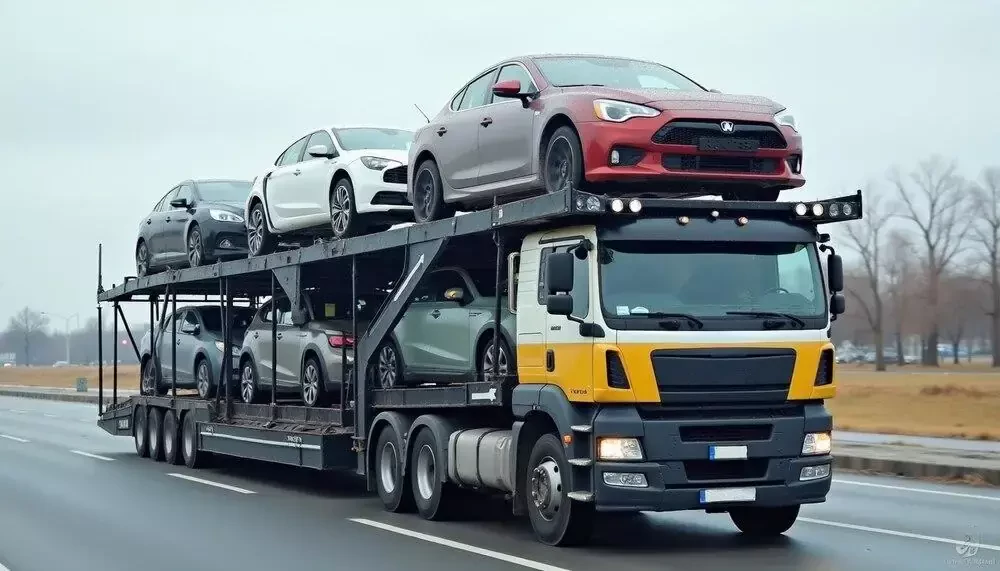
The most common way to ship a car is on an open carrier. You have seen these on the highway. They are long trailers stacked with cars. The cars are exposed to the air.
This is the industry standard. It is the most affordable option.
When you look at open car transport rates, you will see they are very reasonable.
This method costs approximately $400–$500 less than enclosed options.
Why is it cheaper? Because the truck can hold more cars. A standard open trailer holds 8 to 10 vehicles. This splits the fuel cost among more customers.
Your car will get a little dirty. It might get some dust or rain on it. But it is perfectly safe. It is the same as if you drove the car yourself.
Here is the pricing scale for Open Transport:
- Less than 500 miles: ~$630
- More than 1,500 miles: ~$1,360
For most people, this is the best choice. It balances cost and speed perfectly.
Premium Shipping: Enclosed Auto Transport Cost
Sometimes, an open trailer is not enough. You might have a very special car.
Maybe you have a classic 1960s convertible. Maybe you have a luxury sports car. Maybe the car has high sentimental value.
For these cars, you want extra protection. You want “white-glove” service. This is called enclosed transport.
The car is put inside a fully covered trailer. It has walls and a roof. No rain, snow, or rocks can touch the car.
Because this is a premium service, the enclosed auto transport cost is higher.
Costs are $400–$500 higher than open transport.
Why does it cost so much more? Enclosed trailers hold fewer cars. Usually, they only hold 2 to 6 vehicles.
The driver also needs more skill. They use special lift gates to load low-clearance cars. They take extra care with straps and covers.
This option is best for classic cars, luxury vehicles, or those with high sentimental value.
Here is the pricing scale for Enclosed Transport:
- Less than 500 miles: ~$930
- More than 1,500 miles: ~$1,850
You can see the jump in price. For a long trip, it is nearly $500 more. You have to decide if that protection is worth the money.
Delivery Logistics: Door to Door Vehicle Shipping
The last choice is about location. Where will the truck meet you?
Most people choose door to door vehicle shipping.
“Door-to-door” means the truck comes to your house. The driver loads the car right in front of your driveway. They deliver it to your new driveway.
Sometimes, the truck is too big for small streets. In that case, they will meet you at a nearby parking lot. But it is still very close to your door.
This is the most convenient option. You do not have to travel to get your car.
The other option is “Terminal-to-Terminal.”
A terminal is a big storage lot. You drop your car off at a lot in your old city. The truck takes it to a lot in your new city. You have to go pick it up.
Terminal service is technically the cheapest way to ship a car.
However, you have to be careful. Terminals often charge storage fees. If you can’t pick up the car immediately, you pay a daily rate.
Door-to-door might be cheaper when terminal storage fees are factored in.
Plus, door-to-door saves you time. You don’t have to find a ride to a storage lot. For most movers, the convenience is worth it.
Strategic Budgeting: How to Save Money on Car Shipping
Everyone wants a deal. Moving is expensive enough as it is. You want affordable car shipping without sacrificing safety.
You do not want to choose a bad carrier just to save a few dollars. That could lead to damage or delays.
Instead, you can use strategy. There are smart ways to lower your quote.
Here are actionable tips on how to save money on car shipping:
- 1. Book in Advance
Time is money. If you need a car moved tomorrow, you will pay a premium. This is called an expedited fee. To avoid this, book your shipment weeks ahead of time. This gives the carrier time to plan. - 2. Flexibility is Key
Carriers love flexible customers. They have a complex puzzle to solve. They have to fit cars from different people onto one truck. If you give them a wider window for pickup, it helps them. If you say, “Pick it up any time this week,” they can fit you in when it is most efficient. This efficiency lowers the price for you. - 3. Choose Open Transport
We mentioned this before, but it is worth repeating. Open transport is the key to affordable car shipping. Unless you have a Ferrari, you probably don’t need enclosed shipping. Your daily driver will be fine on an open trailer. - 4. Empty the Vehicle
You might be tempted to pack your car full of boxes. Do not do this. Carriers have strict weight limits. Personal items add weight. If the truck is overweight, the driver gets a ticket. To avoid this, carriers charge extra for personal items. Sometimes they refuse to take the car. Ensure the car is empty to avoid surcharges. - 5. Off-Peak Booking
If you have a choice, pick your dates carefully. Try to ship during late fall or spring. Avoid the summer rush. Avoid the major holidays. When demand is low, carriers lower their rates to attract customers.
Comparison: Driving vs. Shipping
You might be thinking, “I will just drive the car myself. It will be cheaper.”
This is a very common thought. But is it true?
When you do the math, driving is not always cheaper. It has many hidden costs.
You have to pay for fuel. For a cross-country trip, that is a lot of gas.
Gas can cost between $150 and $400 depending on the distance and your car’s mileage.
You also have to eat. You cannot drive 2,000 miles without food.
Meals can cost between $50 and $150.
You also have to sleep. You will likely need a hotel for one or two nights.
Lodging can cost between $100 and $300.
Now add it all up. The cost of driving is getting close to $1,000.
That does not even include wear and tear. A long trip puts miles on your engine. It wears down your tires. It lowers the resale value of your car.
It also takes up your time. Driving across the country takes days. You might have to take time off work. That is lost income.
When you add wear-and-tear and time lost, shipping is often comparable in price.
Plus, shipping is much safer. You avoid the risk of highway accidents. You avoid driver fatigue. You can fly to your new home and relax while your car is transported for you.
Conclusion
We have covered a lot of numbers. We have looked at the logistics of the auto transport industry.
Now, let’s answer the main question again: How much does it cost to ship a car?
The answer is that it depends on you.
The final cost is a balance of three main things:
- Distance: How far are you going?
- Vehicle Size: How big is your car?
- Service Level: Open or Enclosed?
Understanding these factors prevents “sticker shock.” You know that a cross-country move for a truck will cost more than a short move for a sedan. You know that summer moves cost more than fall moves.
This knowledge gives you power. You can budget accurately.
However, averages are just averages. You need a real number for your specific situation.
Stop guessing and get a personalized, free quote.
A custom quote is the only way to see exactly how these variables apply to your move. It takes your specific zip codes and your specific vehicle into account. It is fast, easy, and gives you the exact figure you need for your moving budget.
Frequently Asked Questions
How much does it cost to ship a car 1,000 miles?
On average, shipping a standard sedan 1,000 miles costs approximately $960 on an open carrier. This can vary based on the season and fuel prices.
Is it cheaper to ship a car or drive it?
While the upfront cash cost of driving seems lower, once you factor in fuel, food, hotels (approx. $300-$800 total), plus wear and tear on the vehicle and lost time, shipping is often comparable in value and much safer.
What is the cheapest way to ship a car?
The most affordable method is Open Transport using a Terminal-to-Terminal service. However, be aware of storage fees at terminals which can negate the savings compared to Door-to-Door service.
Does vehicle size affect shipping cost?
Yes. Larger vehicles like SUVs and trucks take up more space on the trailer and weigh more. A pickup truck typically costs about $300 more to ship than a standard sedan.